


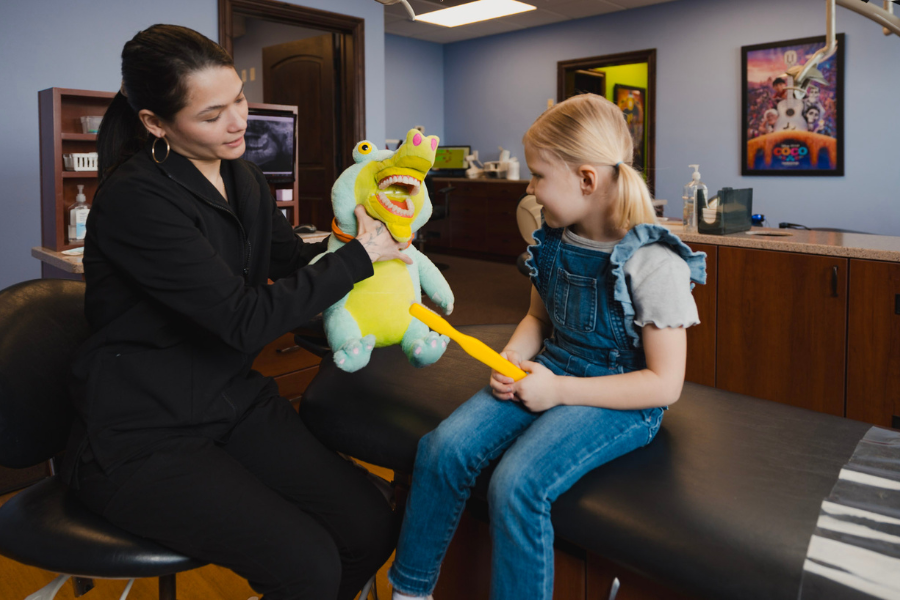
Starting kindergarten brings a long list of new routines. Children learn where to put their backpacks, how to follow a classroom schedule, and what to expect at lunch or snack time.
It’s also an important time to strengthen the habits that protect their teeth.
By kindergarten, children should be learning to brush twice a day, clean between their teeth, make tooth-friendly food choices, and speak up when something hurts. They’ll still need active help from a parent or caregiver, but consistent routines can make healthy choices feel normal before school gets busy.
At Just 4 kiDDS Dentistry for Children, we help families in Idaho Falls, Pocatello, and throughout Eastern Idaho build practical dental routines around each child’s age and development. Regular cleanings & exams also allow us to monitor growing smiles, find concerns early, and offer guidance that fits your child’s needs.
Why Dental Habits Matter Before Kindergarten
Kindergarten changes a child’s daily environment. Parents have less control over when children eat, what they trade at the lunch table, and whether they remember to drink water during a busy day.
A strong home routine creates consistency around those changes.
Healthy dental habits can help lower the risk of cavities, gum irritation, dental pain, and unexpected absences from school. They can also help children feel more comfortable talking about their teeth when something doesn’t feel right.
Baby teeth still matter at this age. They help children chew, speak clearly, smile confidently, and hold space for permanent teeth. Many kindergarteners will also begin losing front teeth or seeing their first permanent molars emerge.
That mix of baby and adult teeth makes professional monitoring especially valuable. Our pediatric dental team can evaluate eruption patterns, check hard-to-clean areas, and help parents understand what changes to expect.
Families looking for a pediatric dental home can learn more through become our patient. Our offices are designed around children’s comfort, with a relaxed atmosphere that helps make dental care feel less intimidating.
Brush Twice a Day for Two Full Minutes
The most important habit to establish before kindergarten is brushing every morning and every night.
The American Dental Association recommends brushing twice daily for two minutes with fluoride toothpaste. Children between ages three and six generally need a pea-sized amount, along with adult supervision to help prevent swallowing and make sure every surface is cleaned.
Morning brushing removes plaque that builds up overnight and helps children start the school day with a clean mouth. Nighttime brushing is especially important because food particles and bacteria should not remain on the teeth while a child sleeps.
Kindergarten-aged children may want to brush independently, and that growing confidence is worth encouraging. However, most children this age do not yet have the coordination or patience to clean every tooth effectively.
Parents should remain directly involved. A child can begin the process, but an adult should check the result and complete any areas that were missed.
Pay close attention to:
- The back molars
- The gumline
- The inside surfaces of the teeth
- The back of the lower front teeth
- Any teeth that are partly erupted
- Areas where teeth overlap
A predictable routine can reduce resistance. Brushing at the same times each day, using the same bathroom setup, and connecting brushing to established activities can help the habit stick.
For example, morning brushing can follow getting dressed, while nighttime brushing can happen before the final bedtime story. The goal is to make dental care part of the daily rhythm rather than a last-minute negotiation.
Use the Right Amount of Fluoride Toothpaste
Fluoride toothpaste strengthens tooth enamel and helps protect teeth from decay. The American Academy of Pediatric Dentistry identifies twice-daily brushing with an appropriate amount of fluoride toothpaste as one of the most effective ways to reduce cavities in children.
For children ages three to six, use a pea-sized amount of fluoride toothpaste unless our dental team gives you different instructions based on your child’s needs.
More toothpaste does not mean more protection. Using the correct amount provides the benefits of fluoride while reducing the chance that a young child will swallow too much.
Children should be encouraged to spit after brushing. Because swallowing skills and comfort levels vary, parents should supervise closely and ask us for guidance when needed.
Some children dislike strong mint flavors or foaming textures. A child-friendly fluoride toothpaste may make brushing easier, but parents should confirm that the product contains fluoride and is appropriate for the child’s age.
Our recommendations may also depend on cavity history, enamel strength, drinking-water fluoride levels, medications, and other health factors. Personalized advice is more useful than relying on a one-size-fits-all product recommendation.
Clean Between Teeth Every Day
A toothbrush cleans the front, back, and chewing surfaces of teeth, but its bristles cannot fully reach tight spaces between teeth.
That’s why children should build the habit of cleaning between their teeth once a day. The ADA notes that floss and other interdental cleaners remove trapped food and plaque from areas toothbrush bristles cannot clean effectively.
Flossing becomes particularly important when neighboring teeth touch. Food and bacteria can remain hidden in those contacts, allowing cavities to develop where parents cannot easily see them.
Most kindergarteners cannot floss thoroughly on their own. Parents should handle this part of the routine or provide close assistance with a method recommended by our team.
Bleeding during flossing may mean the gums are irritated by plaque, especially when flossing has not been consistent. It can also indicate another concern that should be evaluated.
Parents should not assume that gum bleeding, pain, or an unpleasant odor is simply part of learning to floss. We can examine the area and identify whether the issue is caused by hygiene, tooth position, decay, or another condition.
Make Water the Everyday Drink
What children drink throughout the day can have a major effect on cavity risk.
Water is the best everyday drink for growing smiles. It rinses food particles from the mouth, supports saliva production, and does not repeatedly expose teeth to sugar.
Juice, flavored milk, sports drinks, soda, and sweetened beverages can all contribute to decay when consumed frequently. Even drinks that appear healthy may contain enough natural or added sugar to feed cavity-causing bacteria.
The frequency of exposure matters. Sipping a sweet drink over several hours gives bacteria repeated opportunities to produce acids that weaken enamel.
A practical kindergarten routine includes:
- Water between meals
- A refillable water bottle when permitted
- Sweet drinks limited to appropriate occasions
- No sugary beverage in a bedtime cup or bottle
- Clear expectations about what children may choose at school
The ADA advises families to encourage foods low in sugar, limit juice, soda, candy, and sticky treats, and make water the primary drink for children.
Children do not need to understand every detail of cavity formation. A simple rule such as “water is our everyday drink” is often easier for a young child to remember.
Build Smarter Snack Habits
Kindergarteners often eat several times during the day. Breakfast, classroom snacks, lunch, after-school food, and evening treats can create frequent exposure to carbohydrates and sugar.
The goal is not to make food stressful. It is to create a pattern that supports both overall health and oral health.
Tooth-friendly choices may include:
- Cheese
- Plain yogurt
- Fresh vegetables
- Whole fruit
- Eggs
- Nuts or seed products when school rules allow
- Other balanced foods recommended for your child
Sticky snacks can remain on teeth longer than foods that clear away quickly. Gummies, fruit snacks, chewy candy, and some dried fruits may cling to grooves and spaces between teeth.
Crackers, chips, and other refined carbohydrates can also break down into sugars in the mouth. They should not automatically be treated as harmless simply because they are not sweet.
Spacing snacks can be as important as choosing them. Constant grazing leaves less time for saliva to neutralize acids and protect enamel.
Our team can discuss nutrition as part of your child’s overall cavity-prevention plan. We consider the entire pattern rather than placing blame on one food or one treat.
Teach Children Not to Share Toothbrushes
Kindergarten is full of lessons about sharing, but toothbrushes should always remain personal.
Children need to know that they should never borrow someone else’s toothbrush or let another person use theirs. Toothbrushes can carry saliva, bacteria, blood, and other material that should not be exchanged.
Each child should have a clearly identifiable toothbrush stored upright where it can air-dry. Brushes should not be kept pressed together in a crowded container.
Replace a toothbrush when the bristles become frayed or worn. A brush that has lost its shape may not clean effectively, particularly along the gumline and on the back teeth.
Our team may also recommend replacing a toothbrush after certain illnesses or oral infections. Parents should follow the guidance given for their child’s specific situation.
Help Kids Recognize When Something Feels Wrong
Young children sometimes struggle to describe dental discomfort. They may avoid chewing on one side, become irritable at meals, or wake at night without clearly saying that a tooth hurts.
Before kindergarten, children should learn that they can tell a trusted adult when:
- A tooth hurts
- Their gums feel sore
- Chewing feels uncomfortable
- A tooth breaks or becomes loose after a fall
- Their mouth is bleeding
- Hot or cold foods cause pain
- Something feels stuck
- Their face or gums look swollen
Children should never be encouraged to hide pain because they are afraid of the dentist or worried about getting in trouble.
We want children to understand that dental visits are about helping them feel better and stay healthy. Calm, matter-of-fact language at home can make it easier for them to report concerns early.
Dental pain, swelling, broken teeth, and injuries should be evaluated promptly. Our emergency page explains how families can contact us so we can discuss symptoms and determine when a child needs to be seen.
Protect Teeth During Play and Sports
Active play is an important part of childhood, but falls and collisions can damage teeth.
Children should learn basic safety habits before they enter a busier school environment. These include using playground equipment properly, avoiding running with objects in the mouth, and wearing recommended protective gear during sports.
Children should never chew on pencils, classroom supplies, ice, or other hard objects. These habits can chip enamel, damage dental restorations, or place unnecessary pressure on developing teeth.
A mouthguard may be appropriate for organized sports or activities with a risk of facial impact. The right type depends on the child’s age, tooth development, activity, and any orthodontic appliances.
Parents should speak with our pediatric dental team before choosing a mouthguard. A poorly fitting product may be uncomfortable and could interfere with breathing, speech, or normal dental development.
Attend Regular Pediatric Dental Visits
Healthy home habits are essential, but they cannot replace professional dental care.
Routine visits allow us to remove buildup, evaluate the gums, check for cavities, monitor tooth eruption, and identify concerns that may not cause symptoms yet. Just 4 kiDDS emphasizes regular cleanings and exams as one of the best ways to monitor a child’s teeth and development.
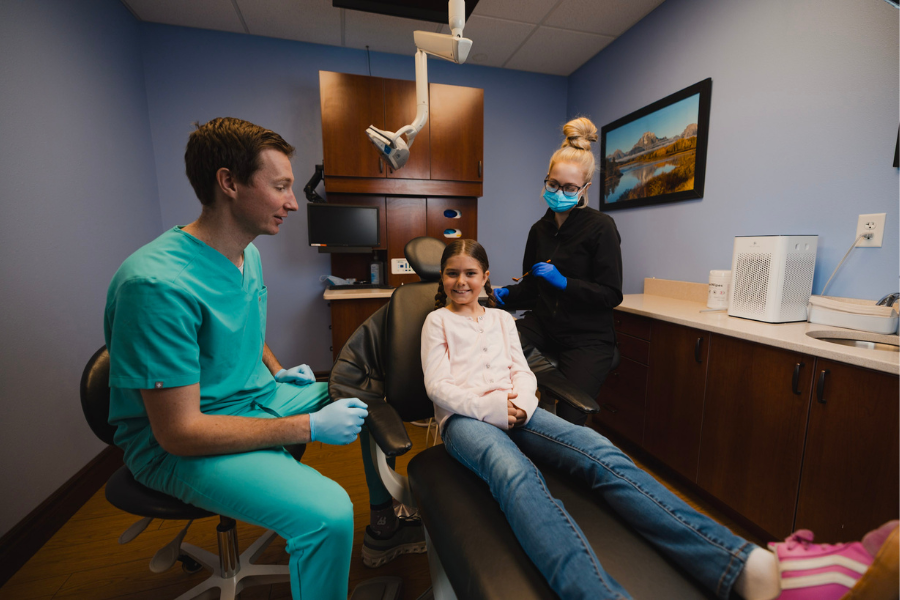
Dental visits before kindergarten can also help children become familiar with the office before they need urgent or complex treatment.
During these appointments, we may discuss:
- Brushing technique
- Flossing needs
- Fluoride
- Nutrition
- Tooth eruption
- Thumb or finger habits
- Grinding
- Speech or bite concerns
- Dental anxiety
- Injury prevention
When permanent molars begin to emerge, we may recommend sealants. Sealants create a protective layer over deep chewing grooves where food and bacteria can collect, helping reduce the risk of cavities in vulnerable back teeth.
Let Children Practice Without Expecting Perfection
Kindergarten readiness includes growing independence, but oral care is not a responsibility children should manage entirely alone.
Children can choose their toothbrush, apply toothpaste with supervision, begin brushing, and help prepare flossing supplies. These small responsibilities give them ownership without sacrificing the quality of care.
Adults should still guide the routine, complete missed areas, and monitor changes in the mouth.
A child who rushes, protests, or forgets steps is not failing. They are still developing fine motor skills, attention, and judgment.
Consistency matters more than creating a perfect routine overnight. Calm repetition teaches children that dental care is a normal part of looking after their bodies.
Praise can focus on effort and cooperation rather than appearance. Statements such as “You opened wide so we could reach the back teeth” are more specific and helpful than vague rewards for having a “good” smile.
Adjust the Routine for Anxiety or Special Care Needs
Some children need more preparation, sensory support, or flexibility around brushing and dental visits.
A child may dislike certain flavors, sounds, textures, positions, or sensations. Another child may become overwhelmed by transitions or struggle to follow a multi-step routine.
These challenges should be addressed with a plan tailored to the child. Parents do not have to guess which tools or techniques are appropriate.
Our pediatric dental team can help families explore:
- Different toothbrush sizes or designs
- Toothpaste texture and flavor options
- Gradual exposure to oral care
- Visual or verbal routines
- Positioning strategies
- Appointment preparation
- Treatment accommodations
- Additional comfort options when care is needed
Our offices were created to help children feel comfortable, and we welcome conversations about anxiety, sensory preferences, communication needs, and previous dental experiences.
Parents can contact our Idaho Falls office or Pocatello office to discuss scheduling and their child’s individual needs. Just 4 kiDDS serves families through both locations, making pediatric dental care more convenient across Eastern Idaho.
Give Your Child a Healthy Start Before the First School Bell
The best kindergarten dental routine is simple, consistent, and supported by adults.
Children should brush twice a day with the correct amount of fluoride toothpaste, clean between touching teeth, drink water regularly, and follow balanced eating patterns. They should also know that tooth pain, swelling, or injuries need to be reported right away.
These habits help protect more than a child’s smile. They support comfortable eating, clear speech, restful sleep, classroom focus, and confidence during an important stage of development.
At Just 4 kiDDS Dentistry for Children, we partner with parents to make oral care understandable and approachable. We’ll evaluate your child’s dental health, answer your questions, and recommend preventive care based on their unique smile.
Contact our team to schedule a kindergarten dental visit in Idaho Falls or Pocatello. We’ll help your child begin the school year with healthy habits and a smile that’s ready for every new experience.
Related Questions
Should a child take a toothbrush to kindergarten?
Most children do not need to brush at school unless a dentist recommends it or the school has a supervised oral-health program. A thorough morning and bedtime routine is generally the priority.
When should children switch from a toddler toothbrush?
A child may need a larger brush when the current head no longer reaches teeth comfortably or the handle becomes difficult to control. Our team can recommend an age-appropriate size during an exam.
Is an electric toothbrush better for a kindergartener?
Either a manual or electric toothbrush can work well when used correctly. The best option is one that fits comfortably, reaches every tooth, and allows an adult to supervise effectively.
What should parents tell a child before a first dental visit?
Use calm, positive language and explain that the dental team will count, clean, and check their teeth. Avoid introducing frightening details or promising that nothing will feel unfamiliar.



.png)


