



The words “time to brush your teeth” can turn an otherwise peaceful evening into a full-scale standoff.
Your child may clamp their mouth shut, hide the toothbrush, cry, run away, or insist that brushing hurts. Some children resist occasionally when they’re tired or distracted. Others struggle with toothbrushing every morning and night.
At Just 4 kiDDS Dentistry for Children, we know these battles can leave parents feeling frustrated, worried, and unsure about what to do next. Brushing resistance is common, but it shouldn’t be ignored. Children still need effective daily cleaning to protect their teeth from plaque, cavities, gum irritation, and infection.
The first step is understanding why your child refuses to brush. Their behavior may be related to independence, discomfort, fear, sensory sensitivity, or a routine that feels unpredictable.
Our pediatric dental team helps families find the cause and build an approach that fits the child. Regular cleanings & exams also give us an opportunity to check for pain, decay, sensitivity, and other problems that can make brushing difficult.
Why Do Children Refuse to Brush Their Teeth?
Toothbrushing resistance rarely happens for no reason. Even when the reaction seems dramatic, the child is usually communicating discomfort, fear, frustration, or a desire for control.
Young children may not have the words to explain what feels wrong. Instead, they may push the toothbrush away, refuse to open, or become upset as soon as the routine begins.
Older children may resist because brushing feels boring, interrupts something enjoyable, or seems unnecessary when their teeth look fine. Children with dental anxiety or special care needs may experience the taste, texture, sound, or movement of brushing more intensely.
Understanding the reason allows us to address the actual problem instead of treating every refusal as misbehavior.
Rule Out Tooth Pain or Mouth Discomfort
A child who suddenly refuses brushing may be protecting an area that hurts.
Possible causes include:
- A cavity
- A loose baby tooth
- A tooth beginning to erupt
- Swollen or irritated gums
- A mouth ulcer
- A chipped tooth
- Food lodged between teeth
- Sensitivity to hot, cold, or pressure
- An injury that was not immediately noticed
Watch for changes beyond the brushing routine. A child with dental discomfort may chew on only one side, avoid certain foods, wake during the night, hold their cheek, or become upset when a particular tooth is touched.
Visible swelling, persistent bleeding, a darkened tooth, or a small bump on the gums should also be evaluated.
Cavities do not always cause obvious pain during their early stages. Our dental fillings & cavities services allow us to identify decay and determine whether a damaged tooth needs monitoring or treatment.
If your child has facial swelling, severe tooth pain, an injured tooth, or another urgent concern, contact our emergency team. We can discuss the symptoms and determine how quickly your child should be examined.
Consider Whether the Toothbrush Feels Uncomfortable
Sometimes the resistance is connected to the toothbrush itself.
A brush head may be too large for the child’s mouth. Stiff or worn bristles may feel rough against the gums. A bulky handle may also make the brush difficult for small hands to control.
Children should generally use a small, soft-bristled toothbrush that comfortably reaches the back teeth. The American Dental Association recommends soft bristles and twice-daily brushing for two minutes. It also advises replacing a toothbrush about every three to four months or sooner when the bristles become frayed.
Powered toothbrushes work well for some children, especially when the movement makes cleaning easier. Other children dislike the vibration or sound and feel more comfortable with a manual brush.
There is no single toothbrush that works for every child. Our team can help parents choose an option based on mouth size, age, coordination, gum sensitivity, and sensory preferences.
Look at the Toothpaste Flavor and Texture
Adults may consider mint toothpaste refreshing, but a young child may experience it as hot, bitter, or overwhelming.
Foaming agents can also bother children who dislike certain textures. Some children object to the smell before the brush even reaches their mouth.
A child-friendly toothpaste with a milder flavor may reduce resistance, but it should still contain an appropriate amount of fluoride unless our pediatric dentist recommends otherwise.
The American Academy of Pediatric Dentistry encourages brushing with an appropriate amount of fluoride toothpaste twice daily for all children. For children ages three through six, a pea-sized amount is generally recommended.
Parents should dispense the toothpaste and supervise brushing. Children may use too much when they squeeze the tube themselves, especially when the toothpaste has a sweet flavor.
Give Your Child Small, Controlled Choices
Children often resist brushing because they want more independence.
The routine feels like something being done to them, especially when an adult is giving several commands at the end of a long day. Offering limited choices can give children a sense of control without making brushing optional.
Useful choices may include:
- Which toothbrush to use
- Whether to brush before or after pajamas
- Which song to play
- Whether to stand or sit
- Which side of the mouth to clean first
- Whether the child or parent puts toothpaste on the brush
Keep the choices simple. Asking too many questions can create another opportunity for delay or negotiation.
The key message remains clear: brushing will happen, but the child can help decide how the routine begins.
Avoid asking, “Do you want to brush?” when declining is not an acceptable option. A more effective prompt is, “Would you like the blue toothbrush or the green one?”
Keep the Routine Predictable
Children tend to cooperate more easily when they know what will happen next.
Choose consistent brushing times and connect them to routines that already occur every day. Morning brushing might follow breakfast and getting dressed. Evening brushing might happen after the bath and before books.
Use the same basic sequence:
- Choose the toothbrush.
- Add the correct amount of toothpaste.
- Brush each area.
- Spit.
- Clean between touching teeth when directed.
- Put the toothbrush away.
A visual schedule may help children who benefit from seeing each step. Pictures can show the toothbrush, toothpaste, brushing, spitting, and finished routine.
Consistency does not mean forcing every night to look perfect. It means maintaining a calm structure so brushing becomes familiar rather than surprising.
Make Brushing Engaging Without Turning It Into a Bribe
Young children learn through play, imagination, and repetition. Bringing those elements into brushing can make the routine feel less clinical.
Parents might use:
- A two-minute brushing song
- A visual timer
- A story about cleaning “sugar bugs”
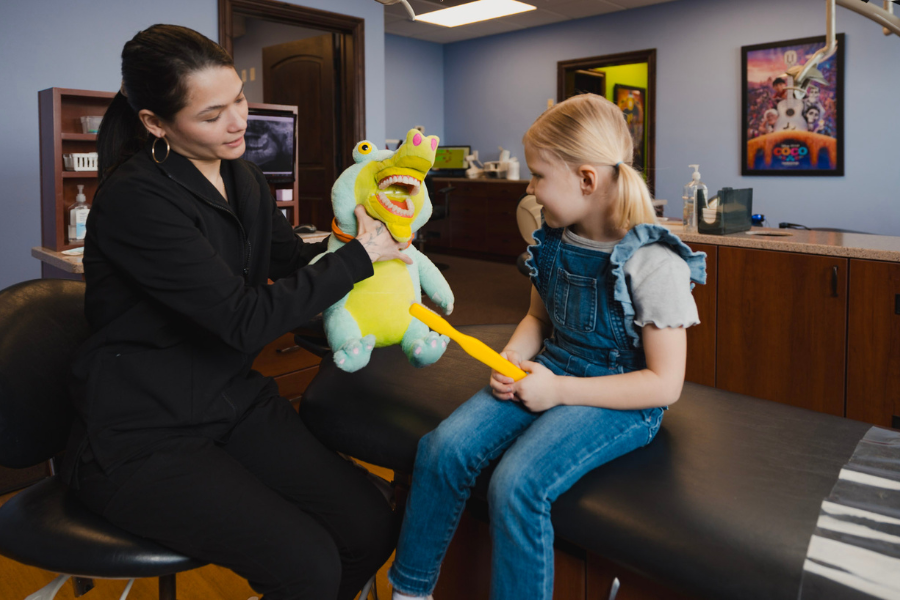
- A stuffed animal that also gets its teeth brushed
- A simple toothbrushing chart
- A mirror so the child can watch
- Praise for completing specific steps
Focus praise on cooperation and effort. Statements such as “You held your mouth open while we cleaned the back teeth” tell the child exactly what went well.
Large rewards can make brushing seem like an unpleasant task that deserves compensation. A playful routine and specific encouragement usually support healthier long-term habits.
Avoid using candy or sweet drinks as toothbrushing rewards. That sends a mixed message and creates additional exposure to sugar after the teeth have been cleaned.
Stay Calm During Toothbrushing Battles
A child’s refusal can be exhausting, especially when the family is already late or everyone is ready for bed.
However, raising voices, threatening dental treatment, or describing the dentist as a punishment can make resistance worse. These reactions may increase fear around both brushing and professional care.
Use a calm, firm tone. Keep explanations short during the conflict because an upset child is unlikely to process a long discussion.
A simple statement might be, “We brush to keep your teeth healthy. We’ll do it together.”
Avoid saying that the dentist will pull teeth, give shots, or be angry if the child does not cooperate. We want children to see our office as a safe place where problems are identified and treated, not as a consequence for behavior.
Families who want a supportive pediatric dental home can learn about joining our practice through become our patient. Our team is experienced in helping children become more comfortable with dental care at their own developmental pace.
Remember That Young Children Still Need Adult Help
A child may insist, “We can do it ourselves,” but independence does not always equal effective brushing.
Most young children lack the hand coordination, attention, and visibility needed to clean every tooth thoroughly. They often focus on the front teeth and miss the back molars, gumline, and inside surfaces.
Letting children begin the process can encourage independence. An adult should then complete the brushing and make sure all areas have been cleaned.
The ADA recommends that parents brush or actively assist young children for two minutes twice a day. Supervision remains important while children are still learning to spit out toothpaste rather than swallow it.
Instead of telling a child they brushed incorrectly, try framing the adult’s role as teamwork. The child can complete the “first turn,” and the parent can handle the “finishing turn.”
Adjust the Approach for Sensory Sensitivities
For some children, toothbrushing is not merely inconvenient. It can feel physically overwhelming.
Sensory challenges may involve:
- The toothbrush touching the tongue or cheeks
- Strong toothpaste flavors
- Foaming or dripping
- Water temperature
- Bright bathroom lighting
- The sound of a powered brush
- Standing near a mirror
- Tilting the head backward
- Another person touching the face
Children with autism, developmental differences, anxiety, or other special care needs may need a more individualized oral hygiene plan. Brushing resistance does not mean the child is being difficult or that a parent has failed.
Just 4 kiDDS recognizes that sensory sensitivities and other barriers can make home care more challenging for children with special needs. Our practice recommends consistent fluoride brushing alongside preventive visits and a plan adapted to the child.
Tell our team what your child tolerates, what causes distress, and which strategies have already been tried. These details help us recommend a realistic approach and prepare for office visits more effectively.
Introduce New Sensations Gradually
A child who is highly resistant may need time to become familiar with each part of the routine.
The process may begin with seeing the toothbrush, holding it, or allowing it near the mouth. The next step may involve briefly touching the lips, front teeth, or cheek.
Progress should follow a professional plan that continues protecting the child’s oral health. The goal is not to leave teeth uncleaned while waiting for the child to become completely comfortable.
Our pediatric dental team can evaluate the child’s current oral health and help parents balance gradual adjustment with the need for effective plaque removal.
This is especially important when brushing has been incomplete for an extended period. Professional care may identify areas of buildup or early decay that are difficult to see at home.
Avoid Skipping Brushing After a Difficult Attempt
It can be tempting to decide that missing one night is easier than continuing the conflict.
An occasional disrupted routine happens in every family. Repeatedly skipping brushing when a child refuses can teach them that resistance successfully ends the task.
It also gives plaque more time to remain on the teeth. Brushing with fluoride toothpaste twice daily is among the most effective ways to reduce tooth decay in children.
When the routine becomes consistently unmanageable, contact our office instead of accepting incomplete brushing as the new normal. We can check for pain, discuss behavior and sensory factors, and recommend the next step.
Watch for Signs That Professional Help Is Needed
Brushing resistance deserves professional attention when it is persistent, severe, or accompanied by changes in the mouth.
Schedule a pediatric dental visit when:
- Your child says brushing hurts
- The gums bleed regularly
- Bad breath continues despite brushing
- You see white, brown, or dark areas on a tooth
- Your child avoids chewing
- A tooth appears broken
- Resistance begins suddenly
- Your child cannot tolerate any toothbrush contact
- Home care remains incomplete despite consistent support
These signs do not always mean extensive treatment is needed. An early examination may reveal a straightforward cause and allow us to address it before the problem becomes more uncomfortable.
Professional fluoride treatments can also strengthen enamel and provide additional cavity protection. At Just 4 kiDDS, fluoride varnish is applied during preventive appointments after the cleaning and examination.
How We Help Children Feel More Comfortable With Dental Care
A positive dental experience can support better habits at home.
When children understand that our team will listen, explain what is happening, and respect their individual needs, they may become less fearful of anything related to their teeth.
We use age-appropriate communication and a child-focused environment to make care more approachable. We also encourage parents to share information about previous experiences, anxiety, communication preferences, sensory needs, and successful calming strategies.
Families can visit our Idaho Falls office or our Pocatello office for pediatric dental care in Eastern Idaho.
When a child needs treatment but struggles with significant anxiety or cooperation, our sedation dentistry options may provide additional support. Sedation is considered according to the child’s needs, medical history, age, and recommended procedure rather than used as a routine response to brushing resistance.
Build a Calmer Brushing Routine With Pediatric Support
Toothbrushing refusal can feel like a small daily issue, but it may point to pain, fear, sensory discomfort, or a routine that needs adjustment.
The solution begins with identifying the cause. A comfortable toothbrush, appropriate fluoride toothpaste, predictable timing, limited choices, and active adult support can make brushing more manageable.
Persistent resistance should not be handled through fear, punishment, or repeated skipped brushing. Our pediatric dental team can check your child’s teeth, identify hidden discomfort, and help your family create a plan that supports both oral health and emotional comfort.
Contact Just 4 kiDDS Dentistry for Children to schedule an appointment in Idaho Falls or Pocatello. We’ll help your child move toward a safer, calmer dental routine while protecting their growing smile.
Related Questions
Should siblings share the same tube of toothpaste?
Yes, family members may use the same toothpaste tube as long as each child has a separate toothbrush and the brush does not touch the tube opening.
Can teething cause a toddler to resist brushing?
Yes. Erupting teeth can make the gums tender, particularly around the back molars. Our team can check whether the discomfort matches normal eruption or requires additional attention.
Should children rinse with mouthwash after brushing?
Young children should not use mouthwash unless a dentist recommends it and confirms they can spit reliably. Mouthwash does not replace brushing or cleaning between teeth.
Is morning or nighttime brushing more important?
Both matter, but bedtime brushing is especially important because it removes food and plaque before the child sleeps. A strong routine should include brushing in the morning and at night.



.png)


